How to Build an Emergency Fund From Scratch

I still remember the exact sound of my radiator hissing its final, pathetic breath on a Tuesday night in February. I was staring at a repair bill that felt like a personal insult, realizing my “financial plan” was basically just a collection of optimistic prayers and a checking account balance that was dangerously close to zero. Most of the stuff you read online about how to build an emergency fund makes it sound like some complex, high-level math problem involving diversified portfolios and complex spreadsheets. Honestly? That’s mostly nonsense designed to make you feel like you need a degree just to survive a broken water heater.
I’m not here to sell you on a complicated lifestyle overhaul or some “get rich quick” scheme that requires you to live on nothing but lentils and tap water. Instead, I’m going to give you the actual, unvarnished blueprint for building a safety net that actually works in the real world. We’re going to skip the fluff and focus on the practical, aggressive steps you can take right now to make sure the next time life decides to throw a wrench in your gears, you don’t lose your mind along with your savings.
Table of Contents
Cracking the Code on Your Ideal Emergency Fund Target Amount

So, how much is actually enough? If you ask five different financial advisors, you’ll probably get five different answers, which is enough to make your head spin. The standard “golden rule” is to aim for three to six months of essential living expenses. But let’s be real: that number is a moving target. If you’re a freelancer with a fluctuating income or you’re supporting a family, three months might feel like a joke. On the flip side, if you’re single with minimal overhead, six months might feel like overkill. The goal isn’t to hit a magic number just because a textbook said so; it’s about finding a personal comfort zone that lets you sleep at night.
To figure out your specific emergency fund target amount, stop looking at your total salary and start looking at your survival math. Strip away the Netflix subscriptions, the dining out, and the impulse Amazon buys. What does it actually cost to keep your lights on, your rent paid, and your stomach full for thirty days? Once you have that baseline, you can start layering on the essentials. This is where your financial safety net strategies really kick in—it’s about building a buffer that covers your reality, not some idealized version of it.
Smart Budgeting for Unexpected Expenses Without Losing Your Mind

Look, I get it. Trying to squeeze extra cash out of a tight budget feels like trying to get blood from a stone. But if you want to actually reach your emergency fund target amount, you have to stop treating your savings like an afterthought. Instead of waiting until the end of the month to see what’s left over—which, let’s be real, is usually nothing—you need to treat your savings like a non-negotiable monthly bill.
The secret to not losing your sanity is automating emergency savings right from the jump. Set up a recurring transfer from your checking to a separate account the same day your paycheck hits. This way, you’re making decisions about your money before you have the chance to spend it on something you don’t actually need. To make this even more effective, park that money in a high yield savings account for emergencies. It keeps your cash liquid and ready for when life gets messy, but it also lets it grow just a little bit faster while it sits there waiting for its moment to shine.
Five Ways to Actually Make This Happen (Without Feeling Broke)
- Treat your savings like a mandatory bill. Don’t wait until the end of the month to see what’s left over—because let’s be real, nothing is ever left over. Set up an automatic transfer for the day you get paid so the money disappears before you even have a chance to miss it.
- Open a separate “vault.” If your emergency fund sits in your everyday checking account, you will spend it on something stupid like a last-minute concert ticket or a takeout binge. Move it to a high-yield savings account at a different bank so it’s out of sight and actually earning a little interest.
- Hunt down “found money.” Did you get a tax refund? A random birthday check from Grandma? A bonus at work? Instead of treating it like free money for a shopping spree, shovel at least half of it straight into the fund. It’s the fastest way to jumpstart your progress.
- Micro-dose your savings. If the idea of saving $1,000 feels impossible, stop thinking about the big number. Focus on the $20 or $50 chunks. It’s much easier to swallow small, consistent wins than to stare at a mountain you don’t think you can climb.
- Audit your “leaky” subscriptions. We all have them—that gym membership we never use or the streaming service we only watch once a year. Cancel the junk, take that exact amount of money, and redirect it to your fund. It’s basically free money you were already spending.
The TL;DR: Your Survival Guide
Don’t aim for perfection; aim for progress. Whether it’s $500 or $5,000, the goal is to stop living one flat tire away from a total meltdown.
Automate the boring stuff. If you wait until the end of the month to see what’s left over, you’ll never save a dime—set it and forget it.
Treat your emergency fund like a non-negotiable bill. It’s not “extra” money; it’s the price of admission for sleeping soundly at night.
The Real Reason You Need This Cash
“An emergency fund isn’t just a pile of money sitting in a savings account; it’s the difference between a broken water heater being a minor inconvenience and it being a total life crisis that keeps you up until 3:00 AM.”
Writer
The Bottom Line
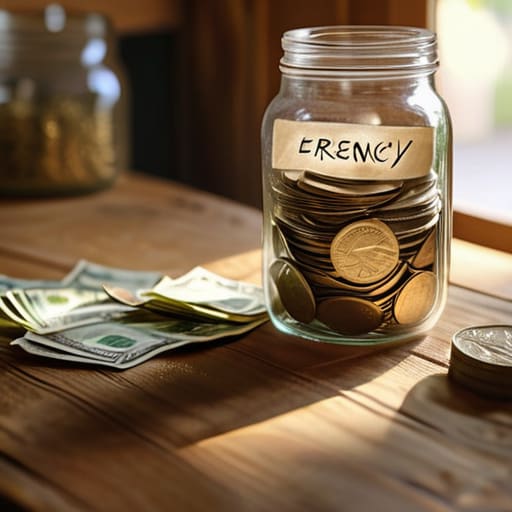
Look, building this fund isn’t about mastering complex spreadsheets or becoming a math genius overnight. It’s really just about the basics we’ve talked about: figuring out your actual number, carving out small chunks of cash from your budget, and being relentlessly consistent even when it feels like you aren’t making progress. You don’t need to have it all figured out by tomorrow morning. Whether you’re starting with fifty bucks or five hundred, the goal is to stop living one broken transmission away from a total meltdown. Once you have that foundation, you’re no longer just reacting to life; you’re actually in control.
At the end of the day, an emergency fund is more than just a pile of money sitting in a boring savings account. It is, quite literally, buying yourself peace of mind. It’s the ability to sleep through the night knowing that if the universe decides to throw a curveball, you’ve already got the glove ready. Don’t wait for a crisis to realize you need a safety net. Start today, start small, and give your future self the greatest gift possible: the freedom to breathe easy when things inevitably get messy.
Frequently Asked Questions
Where is the best place to actually park this money so it's safe but still easy to grab when I need it?
Don’t just let this cash sit in your everyday checking account—it’s too easy to accidentally spend it on a Friday night pizza run. You want a High-Yield Savings Account (HYSA). It keeps the money separate and earns a decent chunk of interest, but you can still transfer it to your checking account in a day or two when things go sideways. It’s the perfect balance of “out of sight, out of mind” and “ready when you need it.”
What do I do if an emergency happens before I've even reached my goal amount?
Take a breath. You’re not a failure; you’re just in the middle of the process. If life hits before your fund is full, use whatever you’ve scraped together so far. It’s better than nothing. Then, pivot immediately to triage: figure out what must be paid to keep the lights on and what can wait. Once the dust settles, don’t let the setback discourage you—just get back to building, one dollar at a time.
Should I be using my existing savings for this, or is it better to start a completely separate account?
Look, if you’ve got a pile of cash sitting in your checking account, please—for the love of your sanity—move it. Mixing your emergency fund with your “grocery and Netflix” money is a recipe for disaster. You’ll see that balance and think, “I can afford those concert tickets,” only to realize later you’ve just spent your safety net. Open a separate high-yield savings account. Out of sight, out of mind, and much harder to accidentally blow.